Professional Janitorial Cleaning
You must have routine sanitation based upon risk factors, food processing capacity, allergen concerns, and regulatory checks, plus documented records demonstrating HACCP compliance, inspection results, and government health requirements. The following sections detail essential sanitation program components.
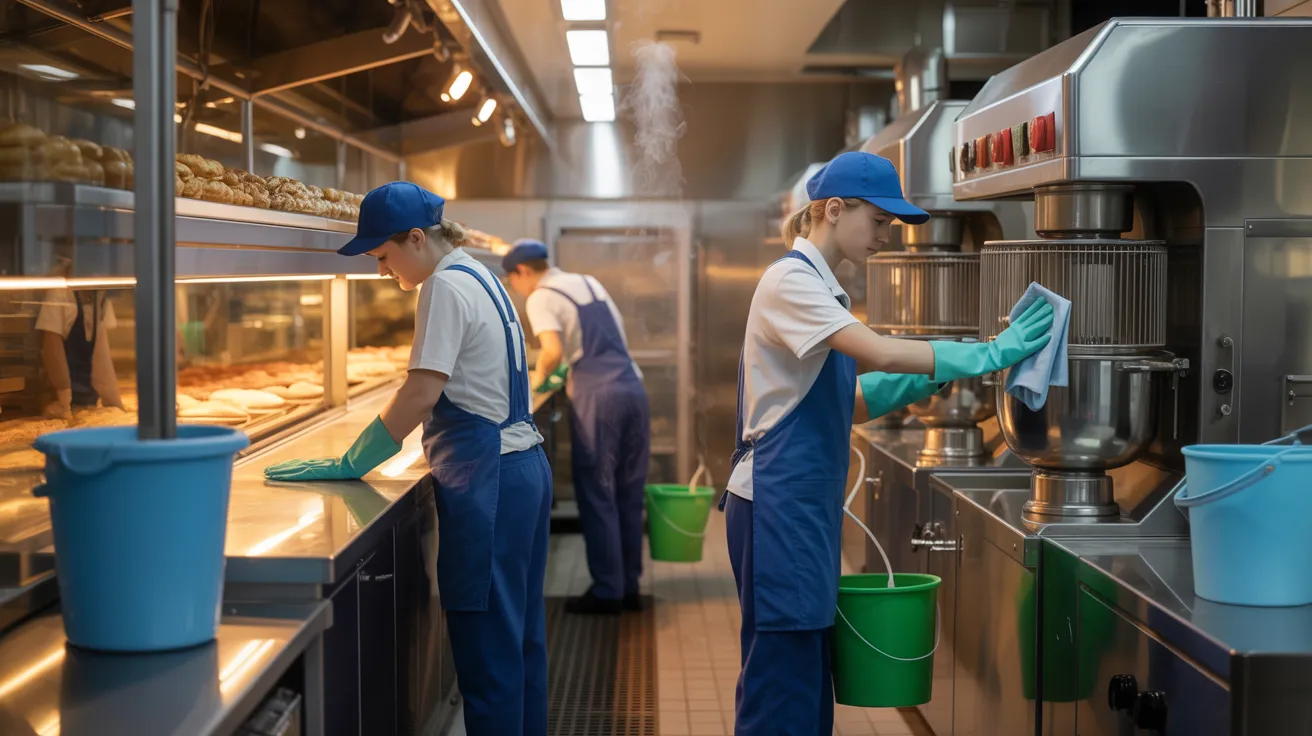
Important Highlights
- Brampton's food safety cleaning specialists support restaurants, grocery departments, commissaries, warehouses, bakeries, schools, mobile vendors, and allergen-sensitive operations.
- Cross-contamination avoidance is accomplished by sanitizing frequently contacted areas, food-contact equipment, kitchens, floors, drains, restrooms, and storage areas with compartmentalized approaches.
- Filing of finalization through tests, inspections, and corrective-action records confirms certified vendors have confirmed proper chemical concentration, alignment, and contact time.
- Daily, weekly, and seasonal activities designated by location form maintenance calendars based on threat, production volume, transitions, accidents, and standards.
- Highlight vendors demonstrating HACCP, sanitation understanding, safety training training, coverage, endorsements, color-categorized tools, and audit-ready hygiene paperwork.
What Brampton Facilities Require Food Safety Cleaning?
You must adhere to food safety cleaning if your business is regulated by health inspections, food codes, or HACCP protocols. This covers food venues, break rooms, food centers, supermarket areas, butcheries, seafood displays, shops, and commercial food prep.
You also need compliant food safety cleaning in distribution centers, food processing plants, freezer facilities, commercial bakeries, educational nutrition programs, event spaces, and catering hubs. Temporary and mobile establishments count too, including food trucks, event vendors, and temporary booths. If your staff process ingredients, portion ready-to-eat items, reheat products, or store allergens, your facility needs recorded sanitation procedures. In Brampton, food safety isn't discretionary; it's part of lawful, functional, and customer safety adherence.
What Services Do Brampton Cleaning Experts Provide?
You need skilled cleaning experts who sanitize frequently touched areas, cooking areas, floor areas, and bathrooms to maintain food safety and public health requirements. These areas are targeted due to their high cross-contamination potential, falling hazards, and regulatory breaches.
If you grasp what they sanitize, you'll be able to confirm your operation satisfies all operational and regulatory compliance needs.
Essential High-Touch Surface Sanitizing
develop a sanitizing protocol
Maintaining a unidirectional cleaning method, swapping towels, and separating cleaning tools by area ensures that plan stays verifiable, documented, and compliance-ready consistently
Food Prep Areas, Flooring, and Sanitary Facilities
Brampton cleaning professionals will handle kitchens, floors, and restrooms since each space presents different food safety concerns, injury, and public health challenges. In industrial kitchens, you need degreasing on cook lines, equipment exteriors, drains, prep surfaces, and splash zones to minimize contamination and pest pressure.
Floor care that is documented should equally be anticipated. Technicians scrub and extract buildup from tile grout, ceramic surfaces, and vinyl floors, then apply proper moisture management so you can reduce slip incidents and meet regulatory standards. They also handle entryways where moisture and debris migrate indoors.
Restroom sanitation involves disinfecting touchpoints, fixtures, partitions, dispensers, and waste containers, replenishing amenities and managing odor. They also maintain restaurant cleaning supply rooms where product storage, sink cleanliness, and drain systems impact daily sanitation standards and worker protection.
The Importance of Food Safety Cleaning in Brampton
In Brampton, you must copyright food-safe cleaning standards to satisfy regulatory standards and achieve compliance. You also minimize bacterial spread through proper cleaning of food-preparation surfaces, appliances, and frequently-touched items. Most importantly, you help protect community wellness by reducing the chance of food poisoning in your establishment.
Sanitary Standards Adherence
Food establishments in Brampton face mandatory safety protocols, making food safety cleaning critical to adhering to health code requirements, defending patrons, and avoiding enforcement action. You must maintain hygienic food handling zones, written maintenance records, appropriate product handling, and verifiable staff procedures that align with municipal and provincial inspection expectations.
During regulatory review of your operation, regulators assess whether your cleaning procedures facilitates proper stock preservation, machinery hygiene, garbage disposal, and washroom maintenance. Well-maintained cleaning files help you to establish due diligence during inspection audits and indicate that your methods are consistent, replicable, and overseen.
Cross-Contamination Prevention
Adhering to health code standards requires your expertise in stopping cross-contamination throughout routine preparation and sanitation work. You need to isolate uncooked items from finished products, clean prep surfaces between tasks, and keep chemicals away from food-contact items. Structured procedures reduce transfer risks and ensure consistent compliance during inspections.
Implementing allergen separation helps ensure major allergens don't touch communal work zones, bins, or devices. Deploy dedicated cutting boards, color-coded tools, and clear tool marking so workers don't combine products during preparation or read the facts service. Require handwashing after handling fresh proteins, aquatic items, egg products, or allergen materials. Refresh cleaning cloths often, and validate disinfectant levels using test strips. When you train staff to follow these controls every shift, you establish a more hygienic, safer workplace that satisfies Brampton's food safety needs regularly.
Community Health Protection
If food safety cleaning deteriorates, you don't merely risk a failed inspection—you boost the probability of pathogenic contamination affecting customers, staff, and the broader Brampton area. You also weaken your role in protecting public health, especially in high-traffic food premises where pathogens travel quickly through surfaces, equipment, and touchpoints.
You need sanitation procedures that eliminate contaminants, disinfect properly, and confirm effectiveness. That means following exposure periods, employing authorized sanitizers, documenting schedules, and educating employees to meet health-unit expectations. These controls support pathogen reduction by lowering microbial loads before they reach food or hands. In Brampton, rigorous cleaning shields at-risk groups, prevents disease spread, and helps you demonstrate proper care. When you maintain proper standards, you don't just meet regulations—you actively reduce risk and support safer food service throughout the region.
How Can Cleaning Practices Ensure Food Safety Compliance?
Upholding thorough cleaning protocols improves food safety compliance by decreasing contamination threats, preventing pathogen multiplication, and keeping your facility aligned with sanitation requirements under HACCP-based programs and public health regulations. You ensure that product-contact areas are visibly clean and microbiologically controlled, facilitating documented preventive controls and inspection readiness.
Effective cleaning also reinforces allergen control by extracting residues that can cause undeclared allergen exposure. by removing residues that can cause undeclared allergen exposure.
How Do You Plan Commercial Cleaning Services?
Routines for cleaning work most effectively when created based on risk factors, production capacity, and regulatory needs instead of just a set calendar.
You should also plan periodic tasks separately
Selecting the Right Brampton Cleaning Experts: Key Considerations
Begin by evaluating providers based on food-safe sanitation requirements—not solely on budget. You should confirm that each organization comprehends CFIA, public health, and HACCP-aligned expectations applicable to your facility. Request insurance certificates, WHMIS compliance, staff training documentation, and oversight procedures. Assess whether technicians recognize cross-contamination risks, chemical handling protocols, and verifiable sanitation records.
Additionally, you need to evaluate service dependability and responsibility. Obtain references from Brampton food operations, then review response times, corrective-action procedures, and communication standards. Verify the company conducts supplier reviews and can deliver inspection-ready documentation when inspectors or external parties need proof. Verify equipment is maintained, color-coded equipment are applied correctly, and site-specific hazards are identified. A qualified provider ensures compliance, product quality, and your reputation.
What does a cleaning and sanitation plan encompass?
Write out a framework that defines every sanitation task, standard, and responsibility before starting production. You should include cleaning frequencies, approved chemicals, dilution rates, contact times, tools, and verification methods for each area, surface, and device. Ensure you include pre-operational inspections, corrective actions, and employee training requirements.
Your plan should also include cross-contamination prevention, waste disposal, pest management measures, and scheduled documentation for bathrooms, drainage, ground surfaces, and food-handling zones. Clarify how you'll separate raw and ready-to-eat processes, support ingredient tracking, and copyright accurate allergen labeling through validated cleaning between product changes. You should establish accountability, preserve signed records, and review results against regulatory standards, HACCP controls, and customer requirements. When gaps appear, revise procedures immediately and re-educate staff.
Popular Inquired Inquiries
Can sanitation providers support nighttime operations in Brampton properties?
If you operate controlled facilities, you'll also need documentation that enable audits and maintain compliance.
Do Brampton cleaning experts provide hazard containment services?
Yes, you can find Brampton cleaning experts to provide emergency spill response services. They manage hazardous materials, evaluate dangers, isolate affected areas, and start rapid decontamination to minimize risk and operational disruption. You should confirm their response times, professional credentials, PPE protocols, and waste management. If your facility must meet health or food safety regulations, select a service that records events, follows compliant sanitation standards, and enables compliance verification.
Are environmentally safe disinfectants suitable for food-handling equipment?
Yes, green disinfectants can be safe for surfaces contacting food if you select solutions certified for food use and complying with regulations. You should confirm application timing, dilution rates, and rinse protocols before application. Many plant-derived products reduce toxic chemical contact, but you require confirmation of performance against specific pathogens. To maintain residue free surfaces, you should adhere to exact manufacturer guidelines and confirm the cleaning agent complies with applicable food industry sanitation standards.
Do cleaning plans support production fluctuations?
Yes, you can customize cleaning plans for seasonal variations. You should modify intervals, personnel, disinfectants, and confirmation procedures to match seasonal patterns while upholding compliance standards. You'll minimize production downtime by organizing cleaning around equipment transitions, peak seasons, and usage patterns. You should further modify standard operating procedures, employee training, and environmental testing to capture temporary risks, new allergens, or elevated soil levels. Regular reviews preserve your schedule efficient.
Will commercial cleaners train your staff on hygiene best practices?
Yes, commercial cleaners typically educate your team on hygiene standards. You get staff training on proper chemical use, contact times, cross-contamination prevention, machine breakdown, and record keeping. They typically align instruction with HACCP, GMP, and CFIA or regional health department regulations. Many perform sanitation audits to verify compliance, identify gaps, and reinforce corrective actions. This allows you to maintain consistent procedures, succeed in audits, and reduce food safety risks daily.
Closing Remarks
By partnering with Brampton food safety and commercial cleaning professionals, you aren't simply tidying—you maintain your facility inspection-ready and your practices up to code. From kitchens to processing floors, every clean surface and maintained corner reduces pest risk and avoids expensive losses. By arranging service at appropriate intervals and following a documented cleaning plan, you protect staff members, customers, and your standing. In a heavily controlled environment, hygienic conditions must be prioritized—they're essential to successful operations.